
Last updated November 23, 2026
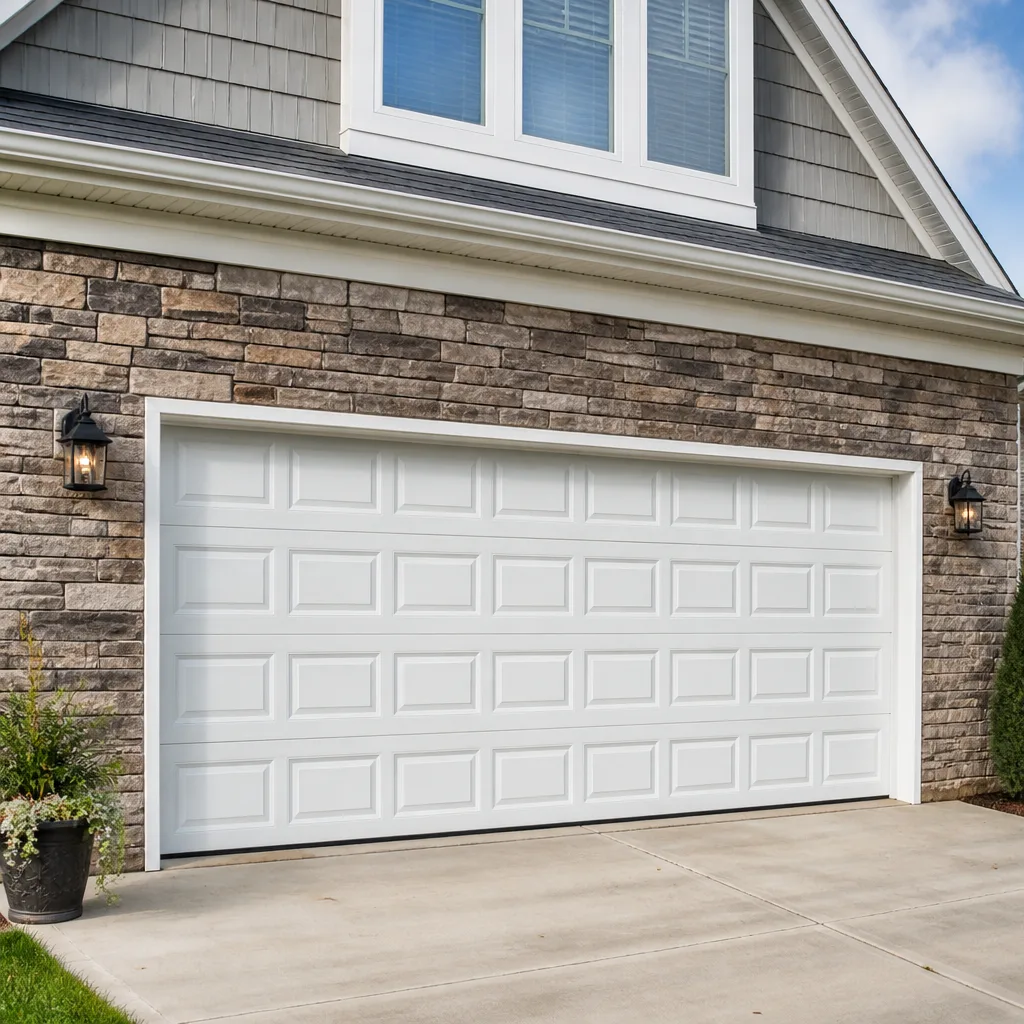 Raised-panel steel
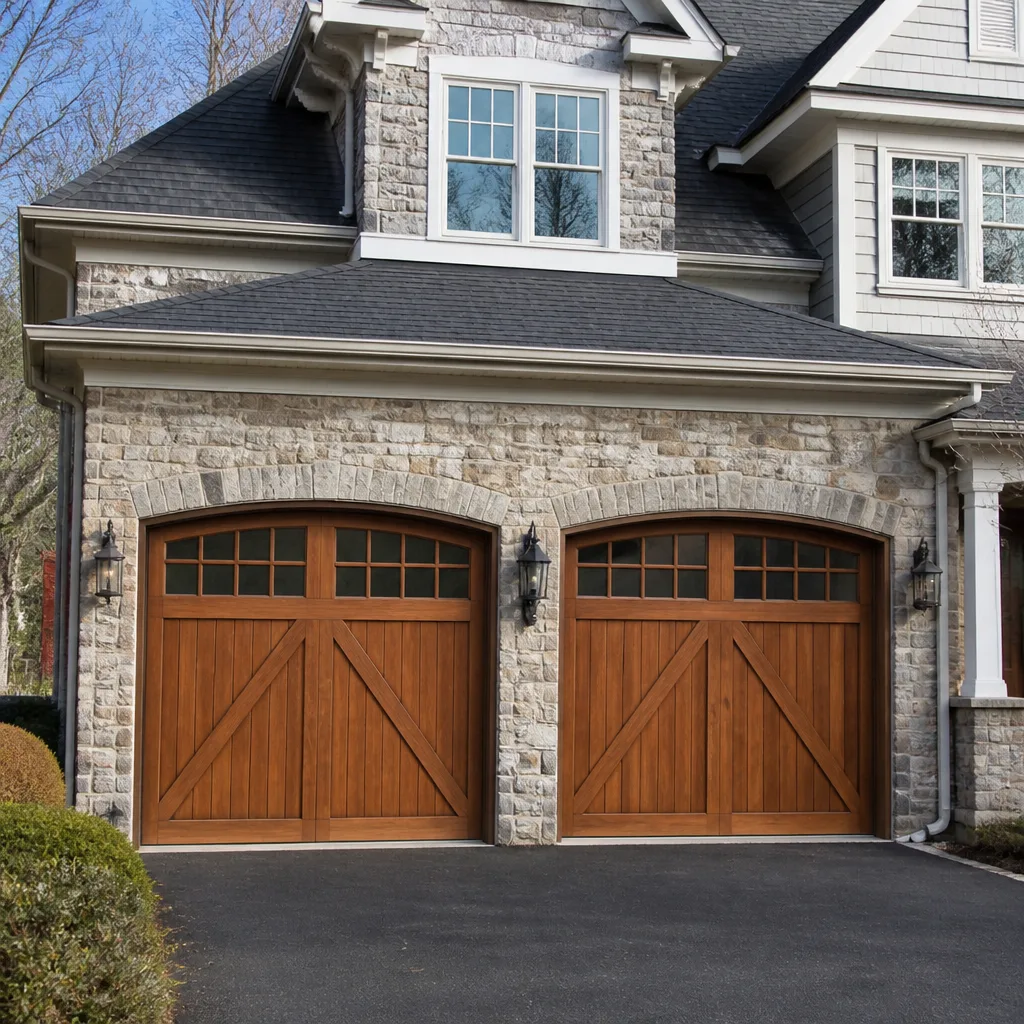 Carriage house
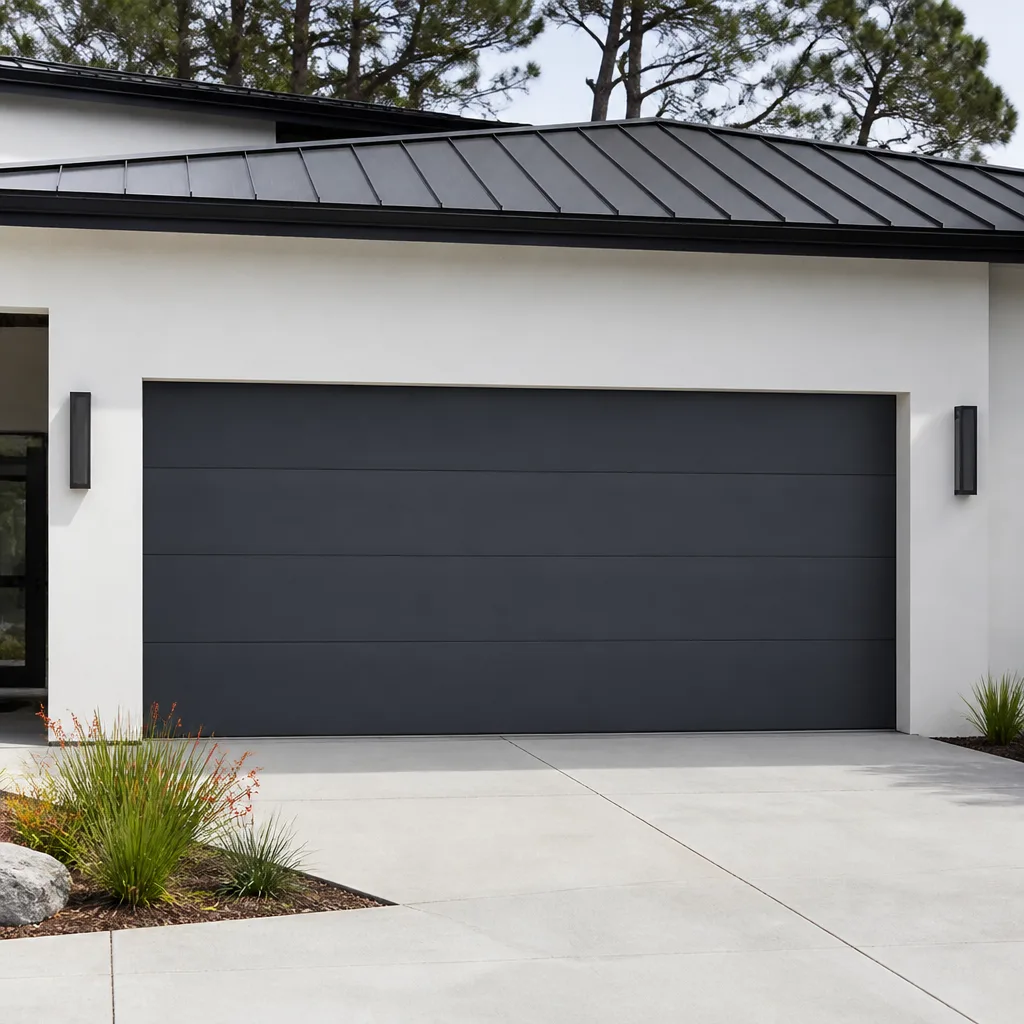 Modern flush
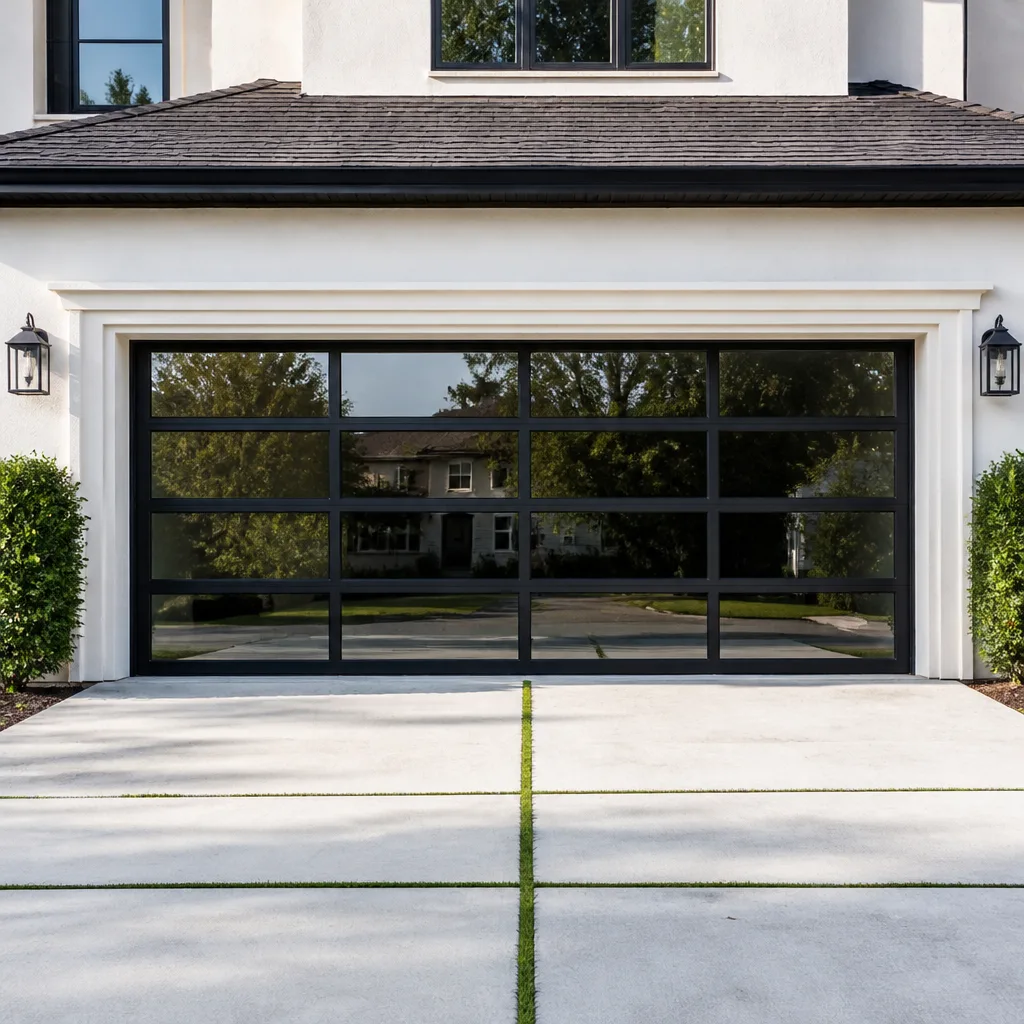 Full-view glass
 LiftMaster openers
 Chamberlain openers
Full 25-point door and opener safety check with every visit - springs, cables, rollers, tracks, and your LiftMaster or Chamberlain opener included
You get a price before we start. It does not change when the pro arrives.
Get your free estimateThe Complete Guide to Garage Doors in Mason
Most homeowners assume a garage door fails because it’s old. In our experience, that’s rarely the whole story. Doors in Mason fail on a schedule set by cycles, not birthdays – and a door that’s only a few years old can be closer to the end than a 15-year-old one that’s been adjusted properly. That’s the counterintuitive part of owning a garage door in this city. The other part is that Mason isn’t a generic suburb. Its subdivisions were built in distinct waves, each with different brands, different framing, and different HOA rules that shape what you can install. This guide walks through all of it, from spring lifecycles to brand performance in Ohio’s freeze-thaw cycles, so you can make a real decision instead of guessing.
Quick Answer
A garage door in Mason typically needs spring service around the ten-thousand-cycle mark, opener repair when the motor or logic board fails, and full replacement when the panels or track are structurally compromised. Most repairs cost less than replacement, and the right call depends on the door’s cycle count, its brand, and the failure type – not just its age. We answer 24/7 and dispatch technicians 7am to 7pm, Sunday through Friday.
Styles & brands we work with
- Raised-panel steel
- Carriage house
- Modern flush
- Full-view glass
- LiftMaster openers
- Chamberlain openers
Table of Contents
- Which brands are most common in Mason subdivisions?
- How do Mason’s HOA communities affect your door choices?
- Wayne Dalton, Clopay, and Amarr in Ohio’s freeze-thaw cycles
- Why the same door installs differently in a 1998 colonial vs. a 2022 build
- Repair vs. replace vs. upgrade the opener: a decision tree
- The spring problem hiding in Mason’s aging subdivisions
- Openers in Mason: what fails and why brand matters
- How to choose a garage door specialist in Mason
Which brands are most common in Mason subdivisions?
Mason’s housing was built in waves, and each wave carries its own brand fingerprints. The subdivisions that filled in during the late 1990s and 2000s – Deerfield, Olde Station, and the neighborhoods around them – were largely built with builder-grade doors from a small group of manufacturers. Wayne Dalton units show up frequently in those homes, often paired with a builder-installed opener that has since been replaced or repaired at least once. Clopay doors are also common across those same subdivisions, especially on larger two-car and three-car garages. Newer construction on Mason’s edges leans toward Amarr and Clopay systems, often with smart-home-capable openers from LiftMaster or Chamberlain.
Why does this matter? Because brand concentration shapes parts availability. When a Wayne Dalton torsion spring or a specific Clopay panel profile is common in a city, technicians carry the failure patterns in their heads and the parts sit closer to the job. When a homeowner has an unusual brand, the waiting game begins. This is why we work on the brand you already have, rather than steering every customer toward a single manufacturer. Our technicians have up to 9 years of experience across Wayne Dalton, Clopay, Amarr, LiftMaster, Chamberlain, Genie, Craftsman, and Raynor, and that breadth is what lets us diagnose a Mason door quickly instead of guessing.
If your door has a visible manufacturer label on the bottom panel or the track, read it before you call. That one detail saves time on the phone and often shortens the visit.
How do Mason’s HOA communities affect your door choices?
Mason has a lot of HOA-governed neighborhoods, and that changes the garage door conversation before a contractor ever shows up. In HOA communities, the architectural review process usually dictates panel style, color, window inserts, and sometimes the exact brand and model. A homeowner who picks a door they love at a showroom can find it rejected by the review committee weeks later. The result is wasted time and sometimes a re-order.
Here’s the order we recommend when an HOA is involved:
- Get the current architectural guidelines in writing. Ask your HOA for the door section specifically, not the whole handbook.
- Photograph neighboring doors that have been approved. Approved precedent is often the fastest path through review.
- Confirm color codes, not color names. “Almond” means different things across brands. A code or sample is what the committee needs.
- Submit the architectural request before ordering. Never place a door order until approval is in hand.
- Keep the approval letter with your paperwork. If a later dispute arises, that letter ends it.
The most common HOA friction in Mason is color. A homeowner orders a door close to the approved shade but not identical, and the committee flags it. The other frequent issue is window inserts – some communities have moved to restrict them on street-facing garages. None of this is unusual for Mason, but it’s almost never mentioned in national garage door guides, which is why so many homeowners get surprised.
Wayne Dalton, Clopay, and Amarr in Ohio’s freeze-thaw cycles
Ohio’s cycles are the real test for a garage door. A door can sit through dozens of freeze-thaw swings in a single winter, and each one stresses the same components: the bottom seal, the hinges, the torsion system, and the panel joints. Marketing specs don’t tell you how a door behaves through that. Real-world performance does.
Wayne Dalton doors, common in Mason’s 1990s and 2000s subdivisions, tend to hold their panels well in cold weather but are harder on their bottom seals. The seal hardens and splits faster in freeze-thaw, and a failing seal lets cold air and moisture under the door. Once moisture gets into the threshold, ice can build along the bottom and stress the panel edges. Replacing a bottom seal is one of the simplest jobs on a Wayne Dalton, and it’s often skipped until the problem has already spread.
Clopay doors tend to hold their finish well in this climate but are heavier on their torsion systems. A heavier door means more cycles on the spring and more wear on the opener. In Mason, a Clopay door that’s had one spring replacement is often due for a second sooner than the homeowner expects. It’s the weight, not the brand, driving the timeline.
Amarr doors show up in newer Mason builds and tend to be well-sealed, but their hinges and rollers can seize if lubrication is neglected through a wet spring. Rust is less of a concern here than in coastal climates, but a seized hinge is a seized hinge. The door gets noisy, then the opener works harder, then something gives.
One pattern holds across all three brands: the Mason homeowner who lubricates hinges and rollers once a season and replaces the bottom seal when it hardens gets years more life out of the door than the homeowner who doesn’t.
Why the same door installs differently in a 1998 colonial vs. a 2022 build
Two Mason homes can order the exact same door model and get very different installation outcomes. The reason is the garage opening itself. Header clearance, framing standards, and the plumb of the track changed between Mason’s older subdivisions and its newer construction, and installation has to work within those constraints.
A 1998 colonial in Deerfield or Olde Station typically has tighter header space above the opening. That limits how much vertical travel the door can use and often pushes the torsion system to a different configuration than the homeowner expected. Sometimes it means choosing a door with a slightly different height or a lower-profile opener. In older homes, the framing can also be slightly out of square, which means the track has to be shimmed and adjusted rather than bolted in as-is.
A 2022 build on Mason’s edge usually has more generous header clearance and tighter framing tolerances, so a standard install goes in cleanly. But newer builds introduce their own considerations: high ceilings in some garages mean belt-driven openers need a longer rail, and the outlet locations can require a short extension or a different opener model.
Here’s the practical takeaway: get the opening measured before you order anything. A free, on-site measure is the only way to know whether a door will fit cleanly or need adjustments, and it’s the step that separates a smooth install from a return visit. We schedule a free measure and a written price before any door is ordered, and we never promise same-day service on an installation – it’s measured, ordered, and scheduled.
Repair vs. replace vs. upgrade the opener: a decision tree
This is the question that matters most in Mason, and the answer usually comes down to which failure you’re facing rather than the age on the door. Work through these questions in order.
- Is the door itself still sound? If the panels are straight, the track is intact, and the bottom seal is functional, you’re likely in repair territory regardless of age.
- What failed? Springs, cables, rollers, hinges, and bottom seals are all repair items. Panel damage and bent track are replacement territory more often than not.
- Is the opener the original builder unit? If the opener has been in place since the home was built and it’s now failing frequently, a standalone opener upgrade is often smarter than a door replacement.
- Has the door had more than one major repair in the last few years? If yes, the cost of continued repairs starts to cross the cost of a new door, and replacement makes more sense.
- Are there structural signs? Sagging panels, visible rust-through, cracked panel joints, or a track that won’t stay aligned after adjustment all point toward replacement.
- Does the door match your home’s current plan? If you’re staying for years, the door is a long-term investment. If you’re moving in a year or two, repair usually wins.
For spring and torsion repairs specifically, we recommend a dedicated spring service rather than a general repair call. Springs are dangerous, and the failure mode that hurts most people is the spring that lets go during a DIY attempt. More on that in the next section. For opener upgrades, a garage door opener repair visit often reveals that the opener is worth keeping and only a sensor or logic component is failing.
The spring problem hiding in Mason’s aging subdivisions
Torsion springs are rated in cycles. A standard spring is designed for around ten thousand cycles, and every open and close counts as one. A household that opens and closes the door four times a day uses about 1,460 cycles a year, which means that spring is designed to last roughly eight to ten years under normal use. Homes in Deerfield, Olde Station, and Mason’s older subdivisions that were built in the late 1990s and 2000s are now decades past their original springs’ rated life. Some have already been replaced. Many haven’t.
This is the part most homeowners don’t know: a spring can fail without warning even on a door that’s been smooth for years. The failure is sudden and can be dangerous, and the door should not be operated after a spring breaks. If you’re hearing the door getting louder, noticing a slight sag on one side, or seeing a gap in the spring coil, the spring is the first thing to check.
Here’s what to know before you act:
- Springs are dangerous. Leave it to us, or to any trained specialist. The tension in a wound torsion spring is enough to cause serious injury.
- Never wind or unwind a torsion spring yourself. This is not a cautious-homeowner job.
- Do not operate the door after a spring breaks. The opener can pull the door up unevenly and bend the panels or track.
- A broken spring is usually a same-day repair when the parts are in stock for your door’s brand and size.
Our garage door spring repair service is a dedicated line, not an add-on to a general visit. That matters because the tooling and the safety practice are different from any other garage door repair.
For torsion spring replacement in Mason, plan on roughly the following estimated ranges. These are per spring, since a matched pair is usually replaced together and a pair costs about twice a single spring:
- Single torsion spring replacement: $180 to $340, typical.
- Matched pair replacement: $320 to $620, typical.
- Extension spring replacement (per spring): $120 to $240, typical.
These are estimates, not exact quotes. The written estimate you get on site sets the final price, and that price is quoted and agreed before any work starts. If the number on the invoice ever exceeds the number on the estimate, that’s not how we operate. Call (844) 625-7206 for an exact quote – estimates are free.
Openers in Mason: what fails and why brand matters
Openers fail in patterns, and the pattern depends on the brand. The builder-installed units from the 1990s and 2000s – often Craftsmans and early LiftMaster models – tend to fail at the logic board or the travel limit switch. Newer smart-home openers from LiftMaster and Chamberlain tend to fail at the Wi-Fi module or the wall control. Genie units often have gear and sprocket wear. Knowing which brand is in your garage shortens diagnosis from an hour to a few minutes.
The key industries pattern we’ve seen in Mason is this: when a homeowner replaces an opener, they often buy the same brand they had before, and that’s usually right if the brand has served them well. But if the failure was caused by a heavier door (common with Clopay units) or a misaligned track, a new opener of any brand will fail the same way. Repairs like garage door opener repair are only as good as the diagnosis behind them. We check the door first, then the opener, because the door is what the opener is being asked to move.
For a smart-home-capable opener, the relevant question isn’t “which brand is best” – it’s “which brand is compatible with your door and your door’s weight.” A belt-drive opener on a lightweight Wayne Dalton door is a great fit. The same opener on a heavy Clopay door is under-spec’d and will wear out faster. We work on the brand you already have and can recommend a replacement only after we know what it’s moving.
How to choose a garage door specialist in Mason
Not every garage door company is a garage door specialist. Mason has general contractors, handyman services, and single-brand dealers who will take on a garage door job, and each one brings a limitation. A general contractor may not have the tooling for torsion springs. A single-brand dealer will steer you toward their brand even if your existing door doesn’t match. Neither is what you want when your door is stuck and your car is trapped inside.
Here’s what to look for when you compare companies:
- Full-brand coverage. A specialist should work on the brand you already have. Ask which brands they service.
- Dedicated spring service. If they describe spring repair as a reluctant add-on, that tells you something about their tooling.
- Emergency response as a core service. Ask what happens when a door fails at an inconvenient moment. The answer should be clear, not seasonal.
- Written estimates before work. The price you’re quoted should match the price you pay.
- Full lifecycle capability. The same company that repairs your opener should be able to install a new door when the time comes. Otherwise you’re finding a second contractor mid-project.
If you’re looking for garage door repair in Mason, look for these characteristics before you commit. And if you’re comparing brands, look for a company that carries brand-matched expertise rather than a single-line orientation – our technicians are certified across Wayne Dalton, Clopay, Amarr, LiftMaster, Chamberlain, Genie, Craftsman, and Raynor, and that’s the baseline we’d hold any Mason specialist to.
Common Mistakes to Avoid
- Operating the door after a spring breaks. It feels like it might still work, but the opener will pull the door unevenly and can bend the track or panels. Leave the door alone and call.
- Ordering a door before checking HOA guidelines. Mason’s HOA communities almost always require architectural review, and a rejected color or style means weeks of delay. Get the guidelines first.
- Skipping the free measure before ordering a replacement. A 1998 colonial and a 2022 build on Mason’s edge have different header clearance, and the wrong measurements mean the door won’t fit cleanly.
- Lubricating the springs. Springs are under tension – oil makes them harder to inspect and adds nothing. Lubricate the hinges and rollers, not the spring.
- Replacing the opener when the door is the problem. If the track is misaligned or the door is heavy, a new opener of any brand will fail the same way. Diagnose the door first.
- Choosing a general contractor for a torsion spring repair. Spring repair requires specific tooling and training. It’s not a general handyman job.
- Assuming a newer door won’t need spring service. Springs are rated at around ten thousand cycles. A door that’s only a few years old can be well into that count if it’s opened often.
See the difference
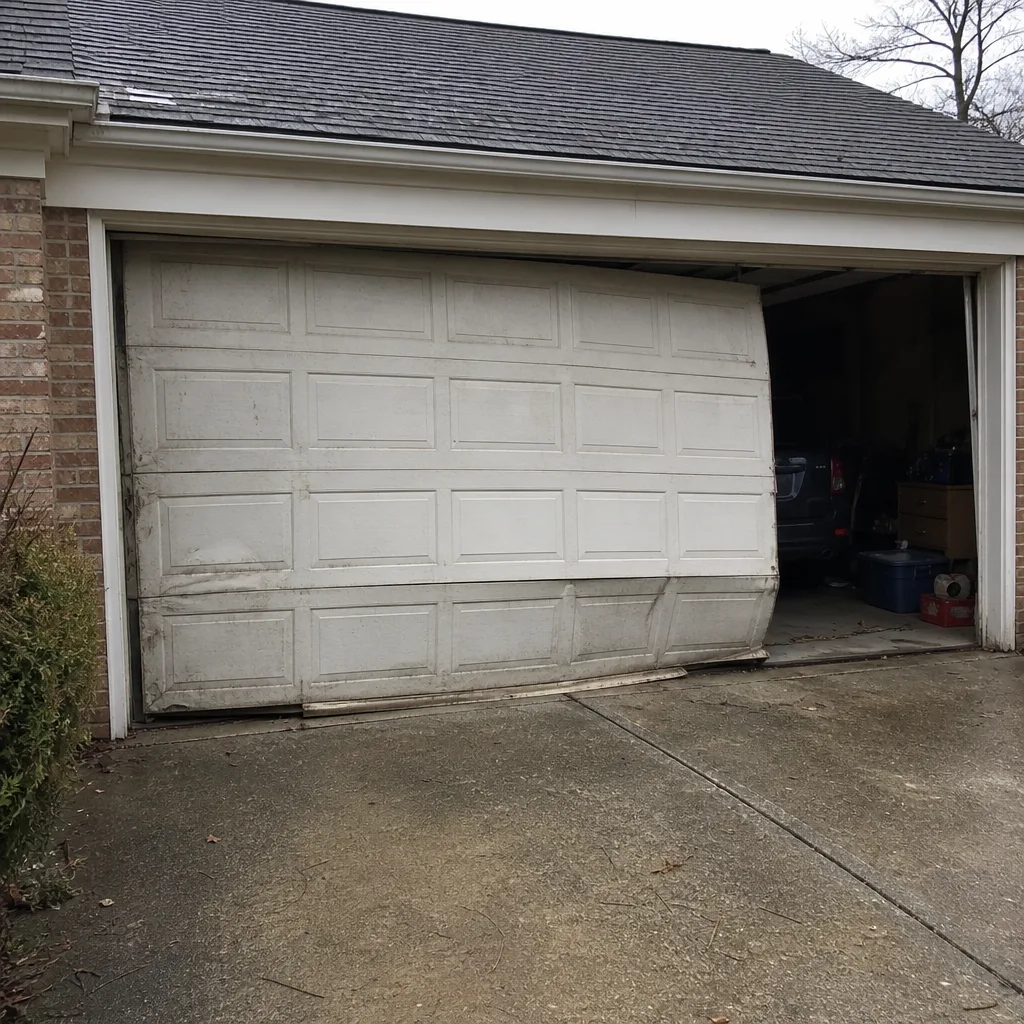 Before
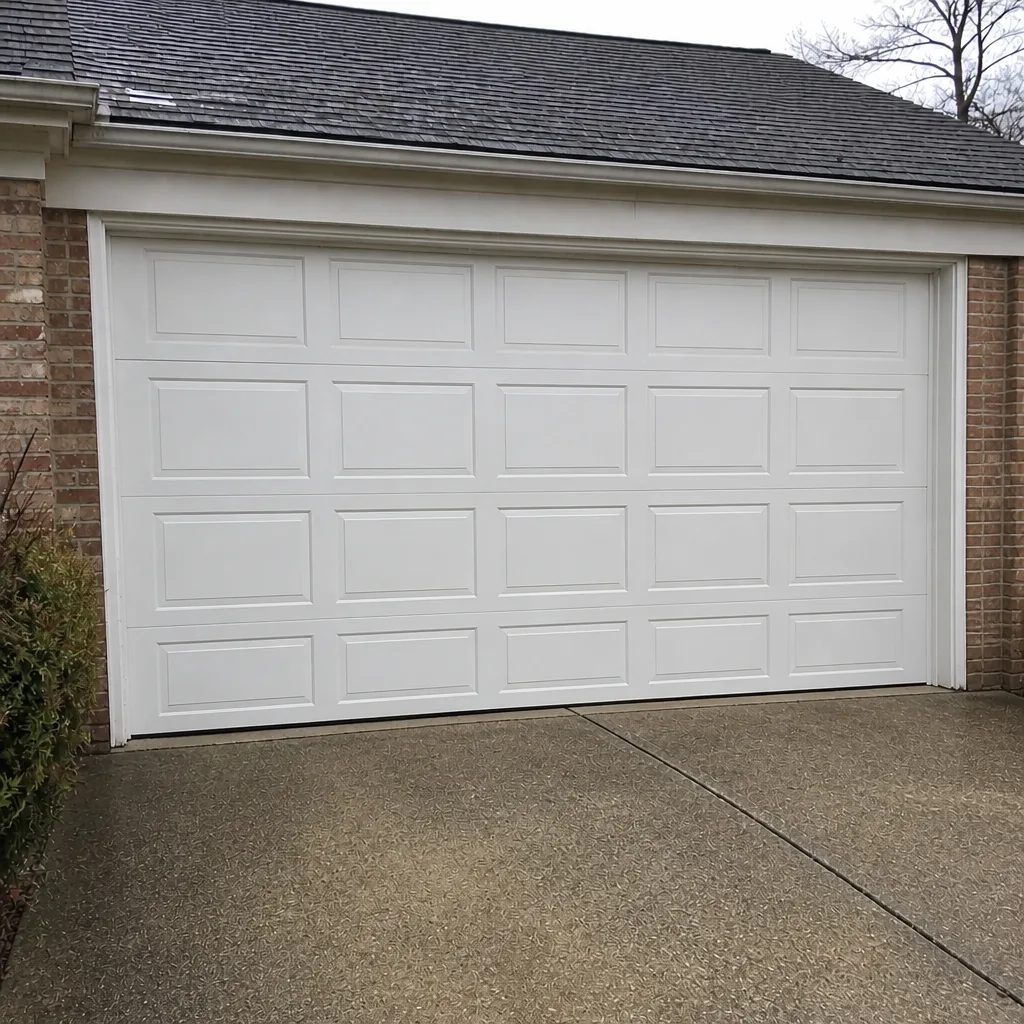 After
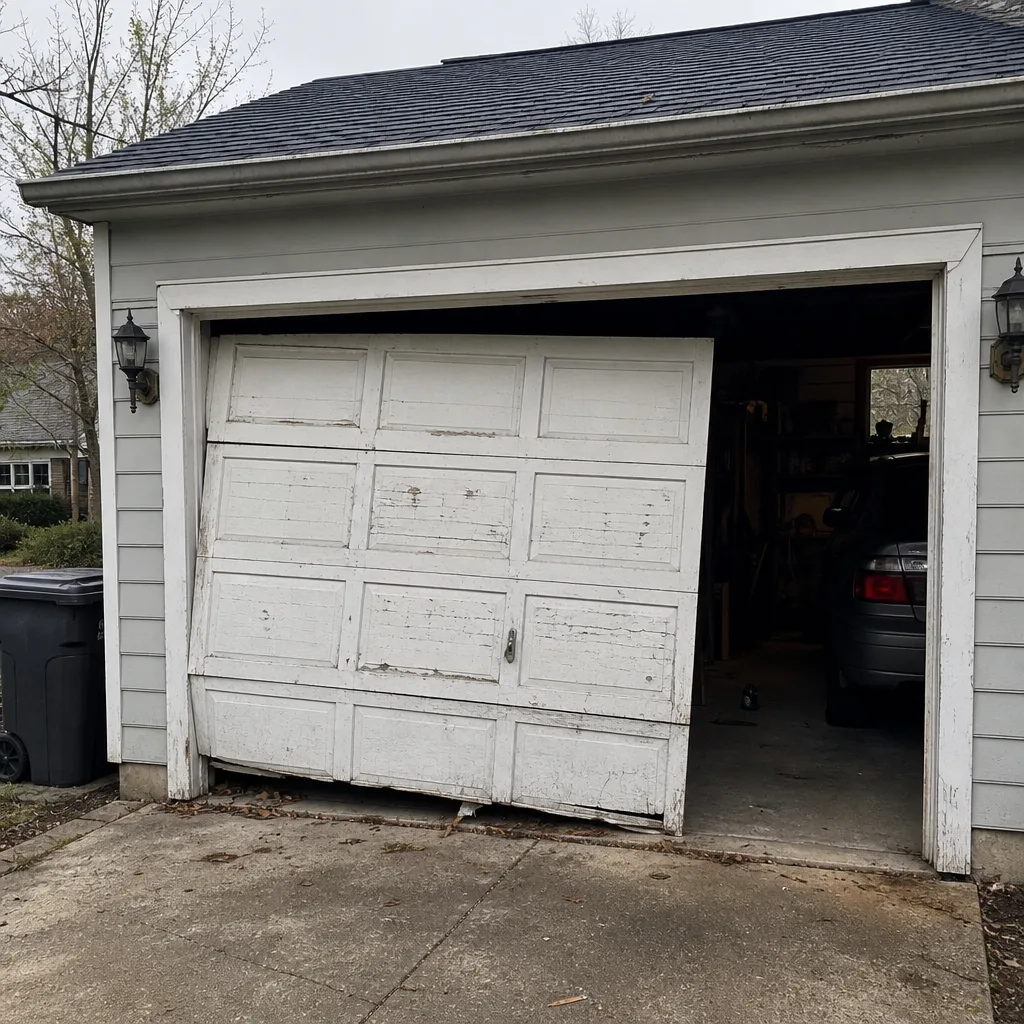 Before
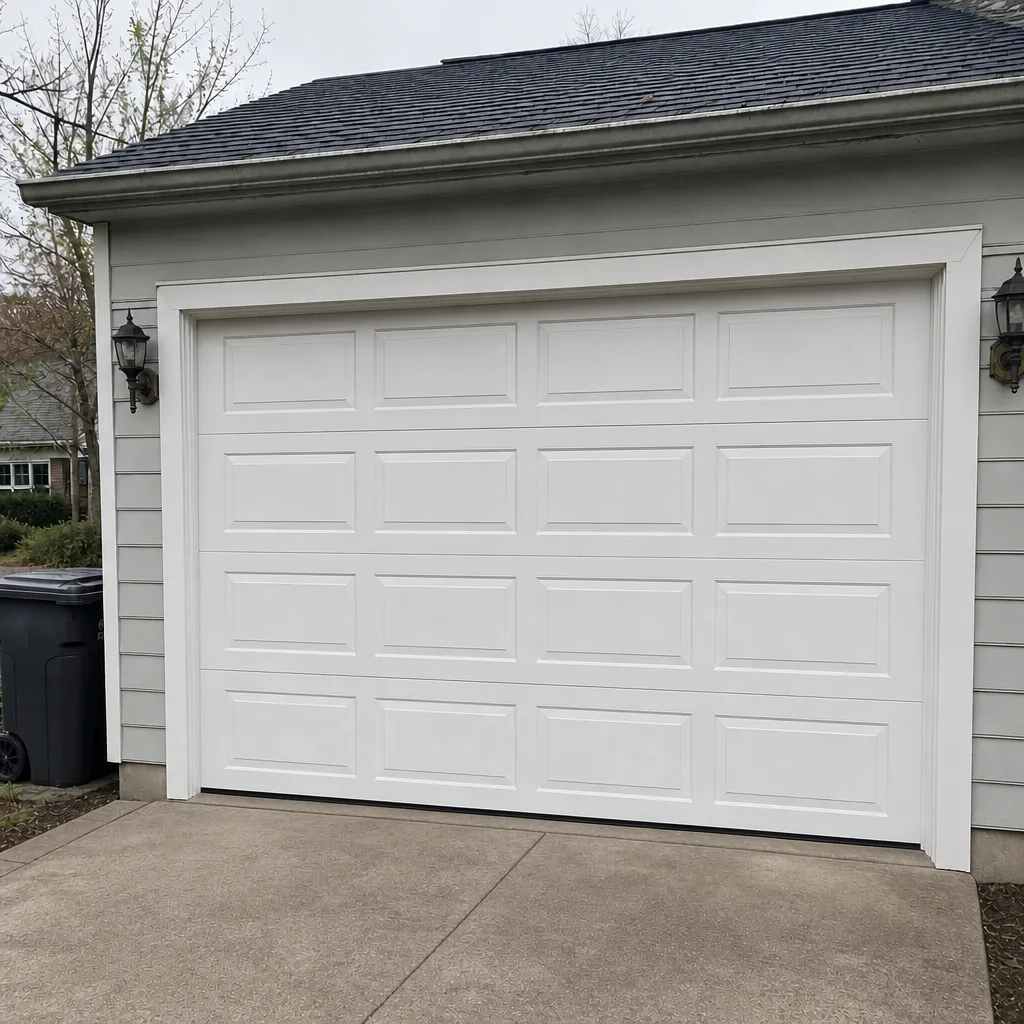 After
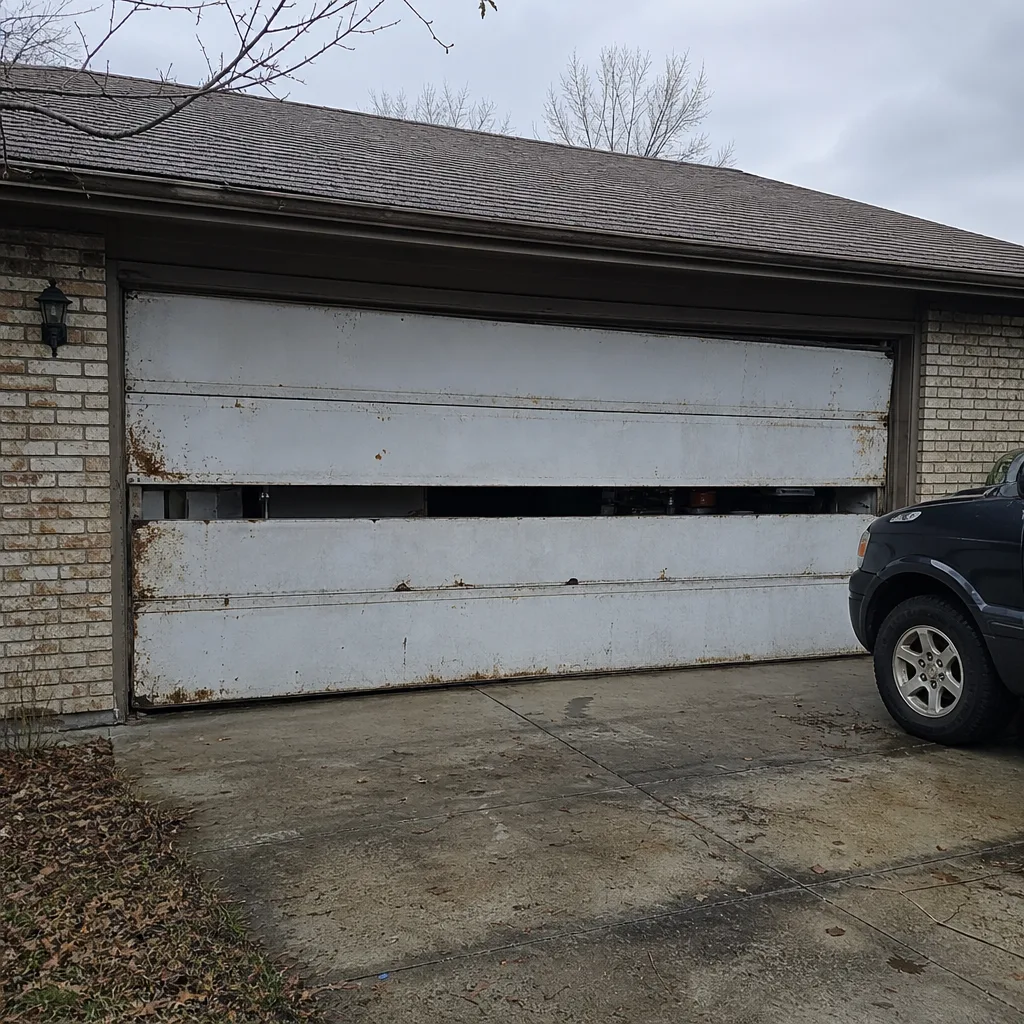 Before
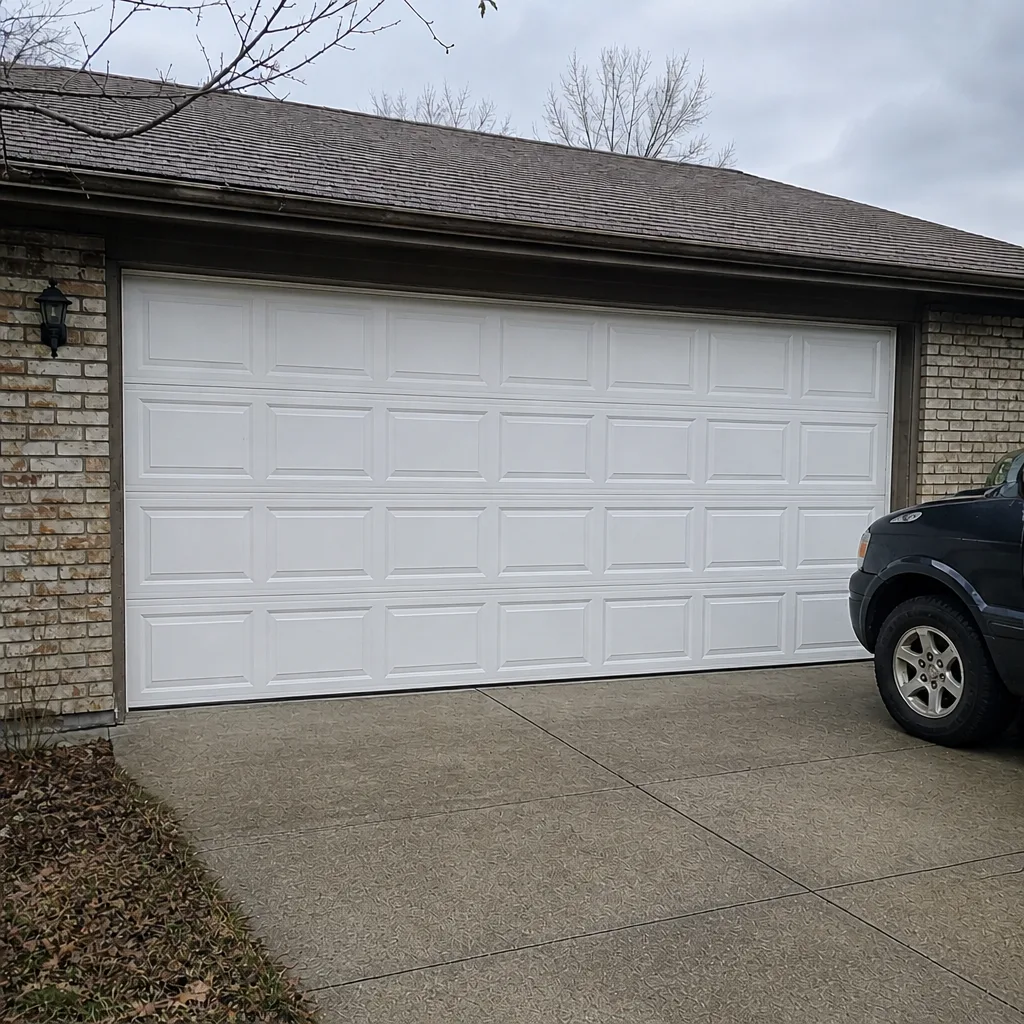 After
When to Call a Professional
Call a professional when the spring has broken or shows a visible gap, when the door moves unevenly or off its tracks, when the opener runs but the door doesn’t move, when the door reverses unexpectedly, or when the bottom seal has hardened and you can see daylight under the door. Those are all signs of a real problem that will get worse. We also recommend a call if you’re hearing the door get noticeably louder – that’s often the first sign of roller or hinge wear, and it’s cheap to fix before the opener starts working harder. Garage Door Repair Mason offers free estimates in Mason. Call (844) 625-7206 and we’ll get someone out to look. We answer 24/7, fast dispatch from 7am to 7pm, Sunday through Friday.
Frequently Asked Questions
Most torsion springs are rated for roughly ten thousand cycles, which for a typical Mason household works out to about eight to ten years of normal use. Homes in older subdivisions like Deerfield and Olde Station that are still on their original springs may be past that window already. If the door is getting louder, one side is slightly sagging, or the spring shows a gap, have it checked rather than waiting for it to break. Call (844) 625-7206 for an exact quote – estimates are free.
We connect you with independent local professionals who are state-licensed and insured as their state requires. Our technicians have up to 9 years of experience, and we work across Wayne Dalton, Clopay, Amarr, LiftMaster, Chamberlain, Genie, Craftsman, and Raynor. Call (844) 625-7206 to talk through what your door needs.
No. The price you’re quoted is set by the written estimate, and it’s agreed before any work starts. If something changes the scope during the visit, we tell you before we do the work, not after. For a free estimate in Mason, call (844) 625-7206.
Often yes. A broken spring or a stuck door is a same-day repair when the parts are in stock for your door’s brand and size. Call (844) 625-7206. We answer 24/7, and fast dispatch runs from 7am to 7pm, Sunday through Friday. If you call outside those dispatch hours, we’ll book you into the next opening.
There’s no single best brand – it depends on your home’s opening, your HOA rules, and how much weight your opener can handle. Wayne Dalton, Clopay, and Amarr are all common in Mason and all perform well when installed and maintained properly. The bigger question is whether the door fits your header clearance and meets your HOA guidelines. Call (844) 625-7206 and we’ll walk through what fits your specific home.
Yes, both. We repair springs, openers, tracks, rollers, and panels on the doors you already have, and we design and install new doors from Clopay, Amarr, and Wayne Dalton. The same company that repairs a 10-year-old opener can handle a full replacement when the time comes. Estimates are free. Call (844) 625-7206.
The Bottom Line
Mason’s garage doors fail on a schedule set by cycles, climate, and installation quality – not just age. The three things worth remembering: your springs are rated around ten thousand cycles and older subdivisions are due; your HOA guidelines should be in hand before you order a door; and brand matters for both parts availability and how a door behaves through Ohio’s freeze-thaw swings. If you want a specialist who works the brand you already have and quotes the price before the work starts, that’s what we do. You can start from our Garage Door Repair Mason page or call us directly. Call (844) 625-7206 for a free estimate. We answer 24/7, fast dispatch from 7am to 7pm, Sunday through Friday.
Written by the team at Garage Door Repair Mason.